
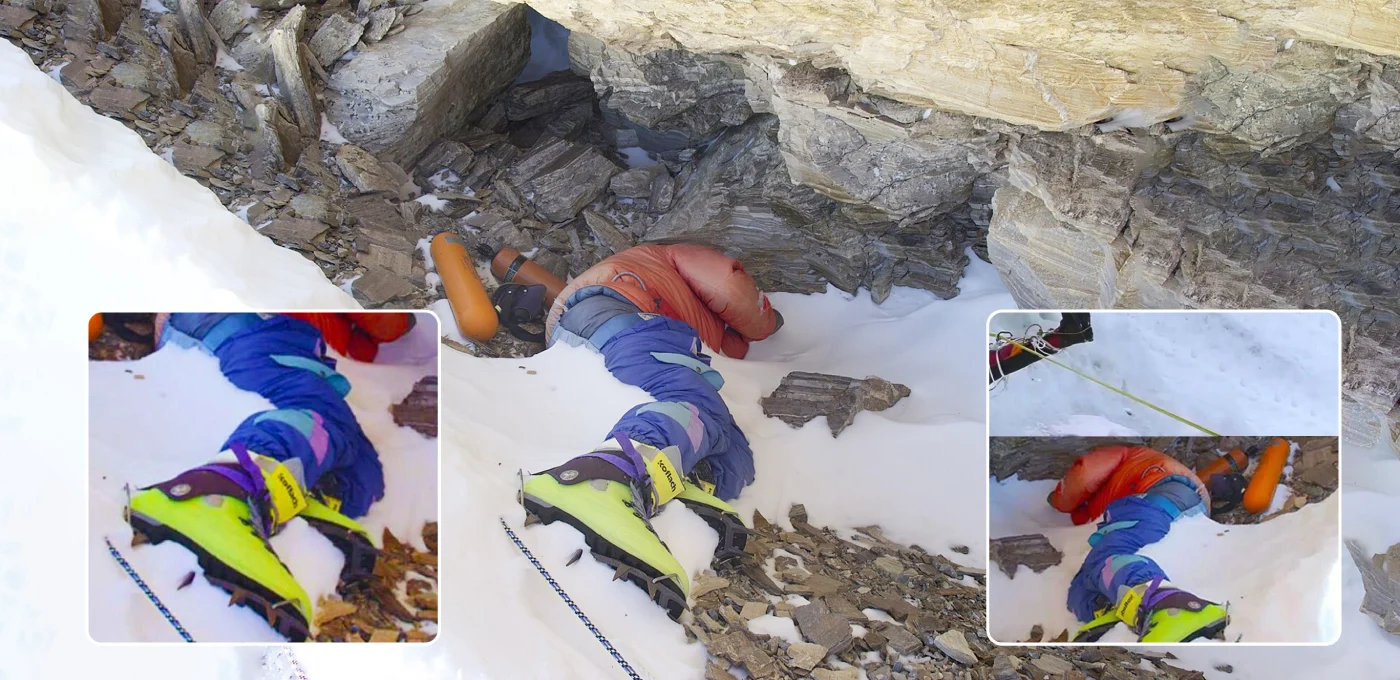
For almost 30 years, the body in the lime-green boot remained a visible landmark. The body was resting on the North-East side of Mount Everest, on the Tibetan side, beneath the limestone cave. Face hid behind his own body. The person remained unknown for almost 30 years on the mountain where every climber tries to save their breath at an altitude above 8000m.
Now the name behind the body is known, and plans are being made to take it down from the height to rest in his home country, India. This blog tells the story behind the green boot and answers why India is trying to bring the body home now.
Story Behind the Green Boot
The person in the boot was Lance Naik Dorje Morup. He was 47 years old when he died. A recent DNA test confirmed it after almost 30 years. Previously, it was believed to be Tsewang Paljor, who was on the same team. But the information wasn’t verified.
The story is of May 1996. An Indo- Tibetan Border Police ( ITBP) team of six planned to climb Everest from the North side. No Indians had ever climbed Everest from that side.
Unfortunately, the weather on Everest remained bad that year. In the same month, May, eight climbers had already died. Yet they chose to climb the Mountain without the help of Sherpa climbers. The team was led by Commander Mohinder Singh.
Three returned as the weather worsened. But three kept going: Subedar Tsewang Smanla, Lance Naik Dorje Morup, and Head Constable Tsewang Paljor. At around 3:45 pm late in the afternoon, Radio announced that they had reached the summit. They were widely reported to have left an Indian national flag and small ceremonial offerings at the summit. Then they began their descent.
While climbing down, they were last seen near Second Step, a difficult rock on the route. None of them could make it back to Camp 6 at around 8,300 metres. All three of them died. The bodies of two of them are difficult to trace back now. But the body of Dorje Morup happened to be a landmark.
Why did the Green Boot become an Everest Landmark?
The body remained in the same location for two decades. It was beneath the limestone cave, on the main climbing route from Tibet. The climber's bright green mountaineering boots made the body easy to recognize. And over time, climbers and guides began referring to the location as "Green Boots Cave".
However, in 2014, the body was moved from that location. There were no official statements regarding its whereabouts.
Many climbers who passed the site have described it as an emotional sight rather than something sensational. It served as a powerful reminder of the dangers of climbing in the Death Zone, where body recovery is often too risky to attempt.
Why Is India Planning to Bring the Body Home Now?
After the body was verified, the Indo-Tibetan Border Police (ITBP) is planning to provide him a dignified farewell. The focus has now shifted from an unidentified climber on Everest to honoring a fallen officer and bringing his remains home.
In 2026, the ITBP reportedly issued a formal tender for one of the highest-altitude body recovery missions ever attempted. The plan involves engaging specialist high-altitude recovery teams, experienced Everest Sherpas, to retrieve Morup's body from Mount Everest and transport it to Delhi. The recovery operation is expected to take place during the June to September climbing season. Weather conditions on the mountain's north side are comparatively more favorable during this time.
Why are dead bodies not recovered from the Death Zone?
Bodies in the Death Zone of a mountain- which is a height above 8000 metres- cannot be safely recovered and are highly expensive.
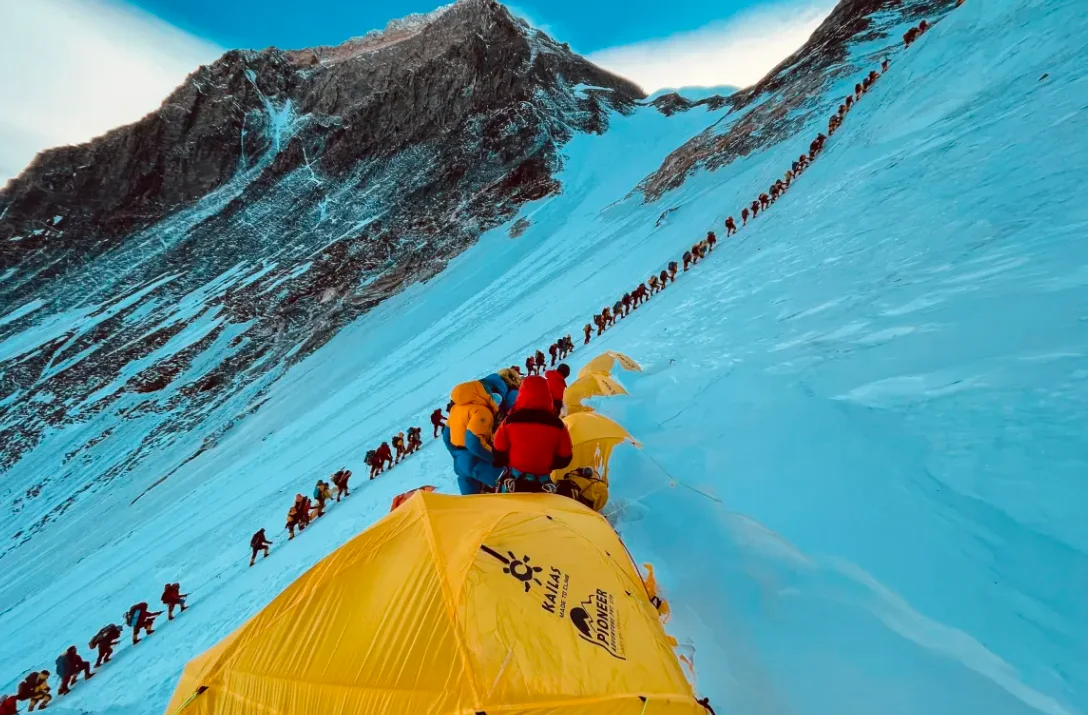
At these extreme altitudes, oxygen levels are significantly lower than at sea level. The body cannot acclimatize at this height. Every movement requires immense energy. Climbers face severe cold, powerful winds, and physical exhaustion. This makes rescue and recovery operations exceptionally dangerous.
Recovering a body often requires a large team of experienced climbers, specialized equipment, and favorable weather. Such operations can place rescuers at considerable risk. This is why many families and expedition teams choose not to attempt recovery unless it can be done safely. For this reason, some climbers remain on the mountain, where they are remembered with dignity and respect.
Conclusion
The soldier died while attempting to be one of the first to climb Everest from Tibet for his country. He reached the summit but couldn’t return. He just remained there. His lime green shoes shone for decades. He became the landmark.
Now his identity is confirmed. His nation and the institution want to bring him back home. They are willing to honor the dead body by letting it rest in his homeland. The body whose identity wasn’t confirmed for three decades.
His team was brave enough to take a different route nobody had. They were brave enough not to take help from Sherpas during their climb. But the mountain didn’t care. The mountain is just there, standing gracefully.
If you are a nature lover or mountain person and are worried about your safety, we will plan a completely safe Mountain trip for you. Our team will plan itineraries, book permits, and everything you need for the trip. Book with us now because we have been doing this for years, and we completely care about your safety. Visit Mountain Delights now for further information.





.webp)